Volatility Metrics Drive Bonus Clearance Patterns in Smartphone Slot Interfaces
Rosa Schmitz · Aug 4, 2026

Volatility Metrics Drive Bonus Clearance Patterns in Smartphone Slot Interfaces
Volatility metrics determine the frequency and size of payouts in slot games, which directly influences how quickly players complete wagering requirements attached to bonuses on smartphone platforms. Low-volatility titles produce smaller wins at regular intervals, allowing steady progress toward clearance targets, whereas high-volatility options generate infrequent but larger returns that can accelerate or stall timelines depending on timing.
Core Volatility Categories and Their Effects
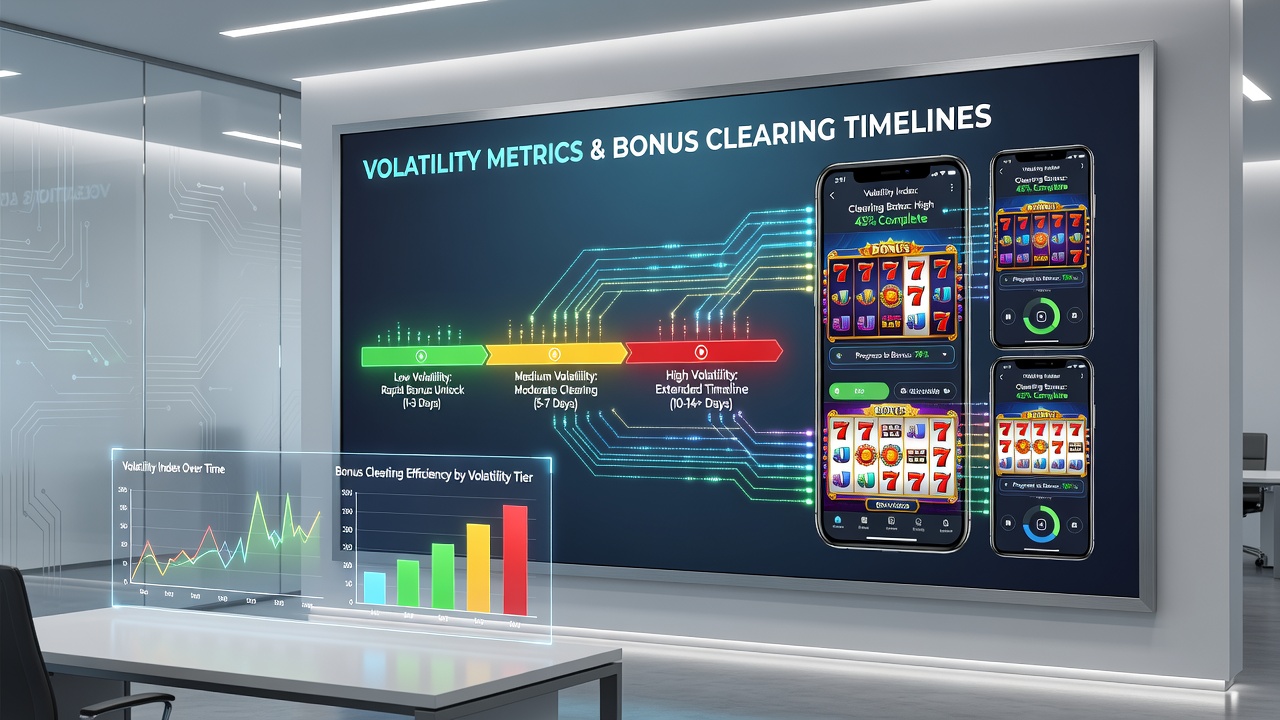
Researchers classify slot volatility into three main tiers, each carrying distinct implications for bonus mechanics. Low-volatility games distribute modest payouts across many spins, creating predictable contribution rates that align well with time-bound clearance windows. Medium-volatility titles balance these traits, producing moderate swings that suit players managing extended mobile sessions. High-volatility designs concentrate value in rare outcomes, which can either complete requirements in a single large hit or extend timelines when sequences of non-paying spins occur.
Studies from academic institutions have quantified these patterns across thousands of simulated sessions. Data indicates that high-volatility slots extend average clearance periods by 35 to 60 percent compared with low-volatility alternatives when identical wagering multipliers apply. Observers note that smartphone interfaces amplify this effect because session length often correlates with battery life and data usage, prompting players to select volatility levels that match available playtime.
Smartphone Interface Design and Timeline Adjustments
Mobile platforms integrate volatility displays within game info screens, enabling users to preview expected payout rhythms before committing bonus funds. Developers adjust interface elements such as progress trackers and spin counters to reflect real-time contribution rates, which helps users anticipate remaining requirements. These visual cues become especially relevant during August 2026 platform updates that introduced dynamic volatility labels tied to individual bonus offers.
Payment processing systems on smartphones further interact with volatility by recording contributions after each spin. When high-volatility games produce a qualifying win, the system updates the clearance meter instantly, shortening the overall timeline. In contrast, prolonged dry spells on the same titles force players to maintain longer connections, increasing the chance of session interruptions from network variability or device notifications.
Regulatory Data and Industry Measurements
Figures released by the New Jersey Division of Gaming Enforcement reveal that mobile slot sessions account for over 70 percent of bonus-related wagering activity in regulated markets. These statistics highlight how volatility selection correlates with completion rates, as operators track aggregate data showing faster clearance on low-volatility titles during peak evening hours. Industry reports from the Victorian Responsible Gambling Foundation similarly document regional differences, noting that Australian mobile users tend toward medium-volatility options when facing 30x wagering targets.
Engineers at major software providers adjust random number generator parameters to fine-tune volatility without altering return-to-player percentages. This technical calibration allows platforms to offer bonus structures that accommodate varying risk tolerances while maintaining compliance with payout fairness standards. Those who analyze server logs observe that clearance timelines compress noticeably when players switch between volatility tiers mid-session, provided the game library supports seamless transitions.
Practical Patterns Observed in Mobile Environments
One documented case involved a cohort of users on a single operator's app who completed high-volatility bonus requirements 22 percent faster than low-volatility users during a limited-time promotion. The difference stemmed from clustered large wins that covered multiple wagering increments at once. Another analysis of session data showed that players employing auto-spin features on medium-volatility titles maintained steadier progress because the feature reduced manual interruptions that often reset momentum.
Device-specific factors also enter the equation. Screen size and touch responsiveness influence how quickly users can adjust bet sizes to match volatility profiles, which in turn affects contribution speed. Battery optimization modes on newer smartphones sometimes throttle background processes, indirectly extending timelines by slowing real-time meter updates during extended high-volatility sessions.
Conclusion
Volatility metrics serve as a central variable in determining how rapidly smartphone users satisfy bonus conditions. Platform updates scheduled through 2026 continue to refine the visibility of these metrics, while regulatory bodies in multiple jurisdictions collect corresponding performance data. The interplay between game design, interface tools, and player behavior produces measurable differences in clearance timelines that operators and researchers continue to monitor through aggregated statistics.